
How We Work
How we work?
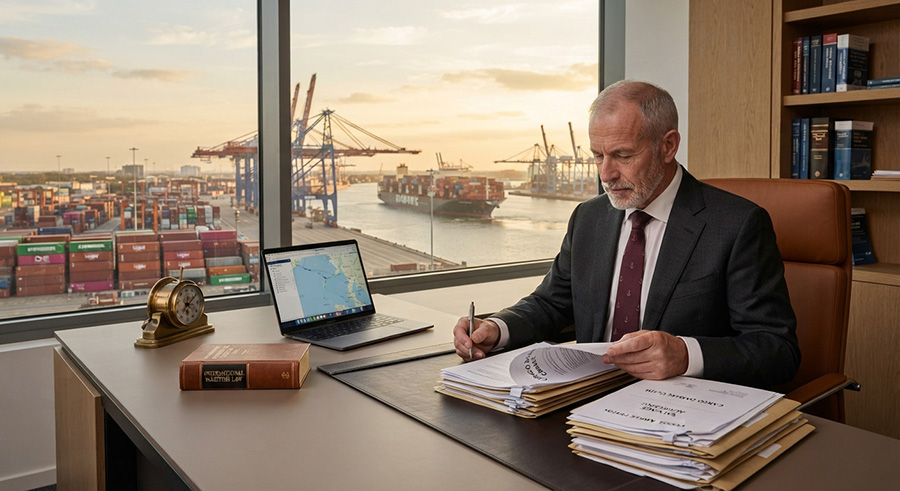
Every maritime claim is different. The vessel, owner, operator, charterer, contractual relationship, port, governing law and available evidence can all affect the legal options available to a creditor.
South America Maritime Claims provides a structured process for reviewing and coordinating maritime claims, unpaid vessel-related debts and shipping disputes with experienced maritime lawyers and local legal professionals in the relevant jurisdiction.
Our objective is to make the process clear for international maritime creditors while ensuring that each matter is assessed according to the applicable local law.
1. INITIAL CLAIM REVIEW
The process begins with understanding your claim.
We review the basic information you provide, including the vessel name, IMO number, debtor, claim amount, invoice details, type of service or supply and the circumstances in which the debt arose.
At this stage, we determine what additional information may be required for a meaningful legal assessment.
2. DOCUMENT AND EVIDENCE REVIEW
Documentation is particularly important in maritime debt recovery.
Depending on the case, we may review:
- Invoices
- Purchase orders
- Contracts
- Delivery receipts
- Captain-signed documents
- Service reports
- Statements of account
- Email correspondence
- Payment promises
- Vessel documents
- Previous legal correspondence
The purpose is to establish the factual background and identify the evidence supporting the claim.
3. VESSEL AND DEBTOR INVESTIGATION
We then examine the parties and the vessel involved.
This may include reviewing the vessel's IMO number, name history, flag, ownership information, management structure and relevant vessel movements.
Identifying the correct legal debtor is particularly important because the party that ordered goods or services is not necessarily the same entity as the registered owner of the vessel.
4. JURISDICTION ASSESSMENT
The next step is determining where legal action may be appropriate.
A maritime claim can involve several jurisdictions. The claimant may be located in one country, the vessel may be registered in another and the debtor may operate from a third country.
If the vessel is located or expected to call at a South American port, the applicable local procedures may become particularly important.
We coordinate with appropriate local maritime counsel to assess jurisdiction, applicable law, available remedies and procedural requirements.
5. LEGAL STRATEGY
After reviewing the claim and jurisdiction, we discuss the available legal options.
Depending on the circumstances, these may include:
- Formal legal demand
- Negotiation with the debtor
- Settlement discussions
- Maritime debt collection
- Court proceedings
- Arbitration-related measures
- Vessel arrest assessment
- Maritime lien or security analysis
- Other protective or enforcement measures available under local law
A vessel arrest is not automatically available for every unpaid maritime debt. Whether it can be requested depends on the nature of the claim and the law applicable in the relevant jurisdiction.
6. LOCAL MARITIME LAWYER COORDINATION
Where local legal action is required, we coordinate with experienced maritime lawyers and legal professionals in the relevant country.
Our network covers Brazil, Argentina, Chile, Colombia, Peru, Ecuador, Uruguay, Venezuela, Paraguay, Bolivia, Guyana and Suriname.
The local lawyer can assess the matter under the applicable national legislation, court procedures and maritime practice.
This jurisdiction-specific approach is important because vessel arrest and maritime claim procedures can differ substantially between countries. For example, Argentina has specific statutory rules governing foreign vessel arrests, while Colombia applies regional Andean rules concerning preventive vessel embargoes.
7. LEGAL ACTION AND CLAIM RECOVERY
If negotiation does not resolve the matter and legal action is appropriate, the next stage can involve proceedings before the competent court or another legally available procedure.
Where a vessel arrest or other protective measure is being considered, timing can be critical because commercial vessels may remain in port for only a limited period.
Any legal action is undertaken through the appropriate legal professionals and subject to the requirements of the relevant jurisdiction.
CONTINUOUS COMMUNICATION
Throughout the process, we aim to maintain clear communication with the claimant.
We understand that most international maritime creditors want to know:
- Who is legally responsible?
- Where is the vessel?
- What legal options are available?
- Can the vessel potentially be arrested?
- What documents are required?
- What are the expected legal costs?
- What should happen next?
Our role is to help answer these questions and coordinate the appropriate legal professionals for the jurisdiction involved.
START YOUR MARITIME CLAIM
If your company has an unpaid ship supply invoice, ship repair debt, marine service claim, maritime dispute or another vessel-related receivable, you can contact us with the available information.
Please provide the vessel name, IMO number, claim amount, debtor details, relevant invoices and supporting documents, together with the vessel's current or expected port if known.
We will review the information and, where appropriate, coordinate with local maritime counsel to assess the available legal options under the applicable law.
South America Maritime Claims — International coordination. Local maritime legal expertise.