
Ship Supplier Claims
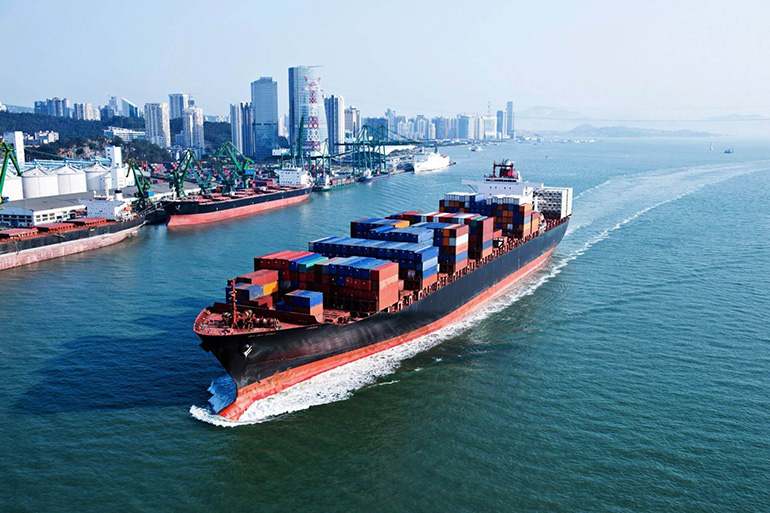
SHIP SUPPLIER CLAIMS IN SOUTH AMERICA
LEGAL SUPPORT FOR UNPAID SHIP SUPPLY CLAIMS ACROSS SOUTH AMERICA
Supplying a vessel is often a time-sensitive and document-intensive business. Provisions, bonded stores, technical materials, spare parts, deck and engine equipment, lubricants and other ship supplies may be delivered quickly because the vessel has a fixed sailing schedule. When payment is not received, however, recovering the outstanding amount can become considerably more complicated.
South America Maritime Claims provides professional legal support and coordinated maritime debt recovery services for ship suppliers, ship chandlers and marine supply companies seeking to recover unpaid invoices connected with vessels operating throughout South America.
Our work covers maritime supply claims in Argentina, Brazil, Chile, Colombia, Ecuador, Peru, Uruguay, Venezuela, Guyana, Suriname, Paraguay and Bolivia, with local legal coordination available according to the jurisdiction, vessel location and nature of the claim.
Whether your company supplied a vessel in Santos, Rio de Janeiro, Buenos Aires, Montevideo, Valparaíso, San Antonio, Callao, Cartagena, Guayaquil or another South American port, we can assess the claim and coordinate the appropriate legal route.
WHAT IS A SHIP SUPPLIER CLAIM?
A ship supplier claim generally arises when goods or services have been supplied to a vessel and the agreed payment has not been made.
Typical claims include unpaid invoices for:
- Provisions and bonded stores
- Deck stores and equipment
- Engine stores and technical materials
- Spare parts
- Lubricants and oils
- Safety equipment
- Electrical equipment
- Welding and maintenance materials
- Paint and coating products
- Ropes, cables and mooring equipment
- Galley and hotel supplies
- Refrigeration and technical equipment
- Underwater and marine services
- Emergency supplies
- Other goods and services required for the vessel's operation
A claim may involve a direct contractual relationship with the owner, operator or manager, or the order may have been placed by a charterer, ship agent, purchasing company or another intermediary.
Establishing exactly who ordered the supplies, who received them, who was contractually responsible for payment and what documents evidence the delivery is therefore an important part of the legal assessment.
DOCUMENTATION IS CRITICAL
A strong ship supplier claim normally depends on clear and consistent documentary evidence.
Depending on the circumstances, relevant documents may include:
- Commercial invoice
- Purchase order
- Order confirmation
- Delivery receipt
- Bunker Delivery Note, where applicable
- Vessel receipt
- Master or Chief Engineer acknowledgement
- Stamped and signed delivery documents
- Service reports
- Correspondence with the vessel
- Emails with the owner, manager or charterer
- Payment records
- Statement of account
- Terms and conditions
- Credit agreements
- Agency correspondence
- Vessel identification and IMO information
We review the available documentation to establish the commercial relationship and identify the parties potentially responsible for the outstanding amount.
The absence of one particular document does not necessarily determine the outcome of a claim. The complete factual and documentary background should be considered together.
SHIP SUPPLIER CLAIMS AND VESSEL ARREST
One of the most important questions for an unpaid ship supplier is whether the claim can support a vessel arrest or another form of security in the jurisdiction where the vessel is located.
This question cannot be answered solely by looking at the invoice.
The applicable law, location of supply, contractual terms, identity of the debtor, vessel ownership, nature of the supplies, applicable maritime conventions and local procedural law may all be relevant.
For example, Brazil has not ratified the 1952 or 1999 international ship-arrest conventions, while Brazilian maritime liens and privileged claims are addressed through Brazilian law together with the 1926 Brussels Convention. Brazilian sources specifically recognise certain ship-supplier and bunker-related claims as potentially capable of attaching to the vessel.
Argentina has its own statutory regime. Its Navigation Law recognises claims arising from supplies or other necessaries for the vessel's operation, maintenance or service, and claims for supplies may fall within the country's maritime privilege regime.
Colombia applies a different framework, including the Andean Community's Decision 487 concerning preventative vessel embargoes and maritime claims.
These differences demonstrate why a ship supplier claim should be assessed according to the specific jurisdiction in which recovery or security is being considered.
SOUTH AMERICAN COUNTRIES WE COVER
Our South America ship supplier claims service covers:
ARGENTINA
Ship supplier claims involving vessels calling at Buenos Aires, La Plata, Bahía Blanca, Rosario and other Argentine ports can be assessed for available recovery and security measures.
BRAZIL
We coordinate ship supplier claim matters involving major Brazilian ports including Santos, Rio de Janeiro, Paranaguá, Itajaí, Rio Grande, Vitória, Suape and other Brazilian ports.
Brazil is particularly important for international ship suppliers because the applicable rules concerning maritime privileges, vessel arrest and foreign claimants require careful jurisdictional analysis.
CHILE
Claims involving vessels calling at San Antonio, Valparaíso, Talcahuano, San Vicente, Antofagasta, Iquique, Mejillones and other Chilean ports can be assessed and coordinated with local maritime counsel.
COLOMBIA
We assist with claims involving Cartagena, Barranquilla, Santa Marta, Buenaventura, Coveñas and other Colombian maritime locations.
PERU
Ship supplier claims involving Callao, Paita, Matarani, Ilo, Salaverry, Pisco and other Peruvian ports can be submitted for assessment.
URUGUAY
We handle the assessment and coordination of claims involving vessels calling at Montevideo, Nueva Palmira and other Uruguayan ports.
ECUADOR
Claims involving Guayaquil, Posorja, Manta, Esmeraldas and Puerto Bolívar can also be assessed.
VENEZUELA
We can coordinate maritime supply claims involving major Venezuelan ports and offshore maritime operations.
GUYANA, SURINAME, PARAGUAY AND BOLIVIA
We also cover ship supplier and maritime claims connected with these jurisdictions, subject to the applicable local legal framework and the nature and location of the claim.
FROM DEMAND TO LEGAL ENFORCEMENT
Our approach does not stop at sending a payment demand.
Each claim can be assessed through a structured process:
Claim Submission → Document Review → Debtor Identification → Vessel & Ownership Research → Jurisdiction Assessment → Legal Demand → Negotiation → Security / Arrest Assessment → Court Proceedings → Enforcement
Where appropriate, we coordinate with local maritime lawyers to pursue the relevant judicial remedy.
The objective is to establish a practical recovery strategy based on the actual facts rather than applying the same procedure to every claim.
WHY SHIP SUPPLIERS NEED SPECIALIST MARITIME SUPPORT
A ship may remain in a port for only a limited period before sailing. Once the vessel departs, the practical circumstances of a recovery action can change considerably.
For this reason, information such as the vessel's IMO number, current position, next port, registered owner, technical manager, operator, charterer and relevant contractual parties can be important from the beginning.
Early assessment allows the available legal options to be considered before the vessel moves to another jurisdiction.
SUBMIT YOUR SHIP SUPPLIER CLAIM
If your company has supplied goods or services to a vessel and payment remains outstanding, you can provide us with the basic claim information for an initial assessment.
We recommend providing:
Vessel Name • IMO Number • Invoice • Outstanding Amount • Due Date • Delivery Documents • Purchase Order • Debtor Details • Vessel Owner / Manager Information • Relevant Correspondence
Our team can review the available information and coordinate with appropriate local maritime counsel to determine the available legal and recovery options in the relevant South American jurisdiction.
SHIP SUPPLIER CLAIMS ACROSS SOUTH AMERICA
Unpaid Ship Supply Invoices | Ship Chandler Claims | Maritime Debt Recovery | Vessel Arrest Assessment | Maritime Legal Support | Local Maritime Counsel
From a single unpaid ship supply invoice to a complex multi-jurisdictional maritime dispute, we provide a structured point of contact for creditors seeking professional assistance with ship supplier claims throughout South America.